
📡 Digital Tides
Dissecting BeReal's first slip, AI's game-changing uses, the unlikely new heroes of pop culture, LinkedIn's 'broetic' phenomenon, and the dawn of social search.

In this edition, we'll traverse the varied landscape of social media, unpacking BeReal's sudden descent from its ephemeral stardom, the curious phenomenon of 'broetry' on LinkedIn, and the platform's evolving identity.
We'll also explore the innovative use of technology in areas as diverse as mental health and sports nutrition, also how it's transforming our interactions with the natural world. Additionally, the changing dynamics of online search, the vanishing sounds of our world, and the rise of 'phygital' experiences in the era of content fatigue.
On my radar 📡 is a reader-supported publication. To receive new posts and support my work, consider becoming a free or paid subscriber.
In an era where the phrase "Google it" has become synonymous with online search, the landscape of information retrieval is facing a significant shift. A growing number of users are gravitating towards alternative platforms like TikTok, Reddit, Yelp, and more, for varied search inquiries.
This trend is challenging Google's long-standing supremacy in the search domain, rooted in the very limitations of its own search algorithm. The reality is that the proliferation of SEO-driven content and ad-heavy results has compromised the quality and authenticity of information returned by the platform.
These algorithmic shortcomings have inadvertently created an opening for other platforms to flourish. A prime example is TikTok, which initially gained traction as a short video sharing app and is now emerging as a favored search tool among Gen Z users. In a significant turn of events, TikTok ousted Google from its 15-year reign as the world's most visited web domain in 2021.
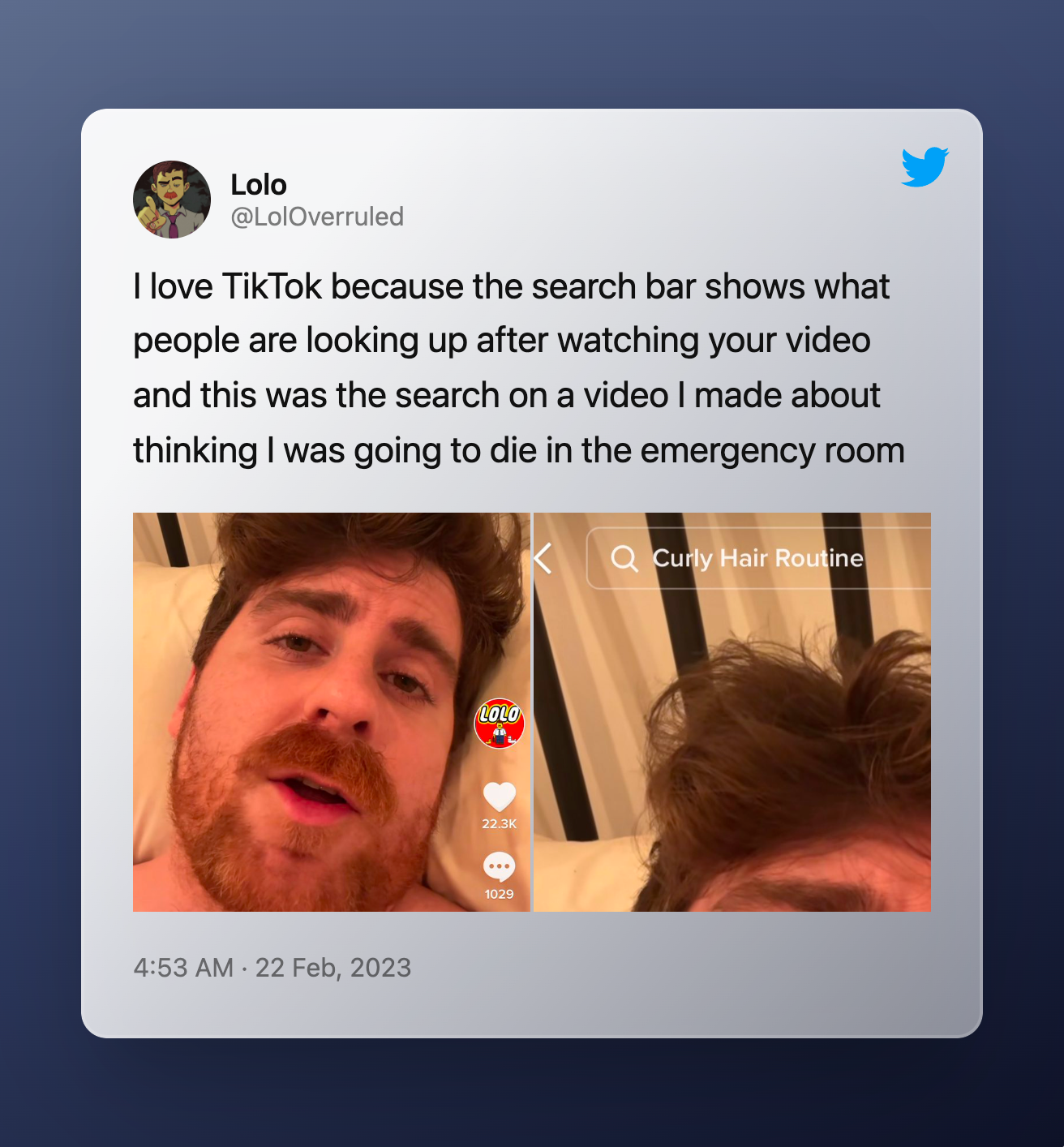
Search technology stands at a crucial juncture. Tech giants like Google and Microsoft are experimenting with Large Language Models (LLMs) to respond to queries, while platforms like TikTok are leveraging their capabilities to provide more personalized and immersive search results. As an increasing number of users alter their search habits to seek personalized answers and real-life experiences it's likely that Google's relevance will keep declining if nothing is done on their part.
Augmented Reality (AR) is transforming the way we see and interact with the world around us. With wearable AR-enhanced glasses, computers can model and interpret our surroundings, creating an interactive environment. Early access to Snap's AR Spectacles has allowed Modem and creative studio oio to prototype an interface that enables users to engage with their surroundings by simply looking at them.
HEALING TRAUMA IN THE METAVERSE
VR therapy takes the next step with group therapy classes set in a virtual Kyiv. Ukrainian refugees are finding solace in a metaverse version of Kyiv, where they can work through their traumatic experiences in a virtual setting. This innovative approach to therapy combines technology with immersive environments, offering a space for individuals to confront and process their emotions in a safe and controlled manner.
AI-DRIVEN NUTRITION FOR ELITE CYCLISTS
Cycling teams are using AI and statistical models to plan their riders' diets during endurance races like the Tour de France. By analyzing data on the route, weather conditions, and individual power output, these models help riders estimate their caloric needs for optimal performance.
DECODING ANIMAL COMMUNICATION WITH AI
Scientists are using AI to decode animal communication and even to begin responding back. This pioneering field of digital bioacoustics utilizes advanced sensors and AI to understand how a broad range of species communicate. The technology is prompting us to reconsider our relationship with other species and might ultimately change the way we interact with the natural world.
THE VANISHING SOUNDS OF OUR WORLD
The rapid pace of technological advancements has led to the disappearance of various sounds from our everyday lives. Obsolete Sounds is the world’s biggest collection of disappearing sounds and sounds that have become extinct – remixed and reimagined to create a brand new form of listening.
Dedicated to preserving these unique soundscapes, the project emphasizes their importance as part of our collective cultural heritage. By drawing attention to these vanishing sounds, the goal is to save them before they are lost forever.
WORMS: THE UNLIKELY HEROES OF TODAY'S POP CULTURE
The worm, a seemingly insignificant creature, has been crawling into the collective consciousness and manifesting in myriad ways, from memes to music. This phenomenon, which may seem like the Baader-Meinhof phenomenon at first glance, appears to be more than just a cognitive bias. It's a cultural shift, a symbolic resurgence that echoes throughout pop culture, from TikTok's parasite cleansing trend, to Heidi Klum's worm costume, and the worm-themed tracks of Black Country New Road and Fat White Family. It's an indicator of something deeper, something that connects us with ancient fears and primal symbols.
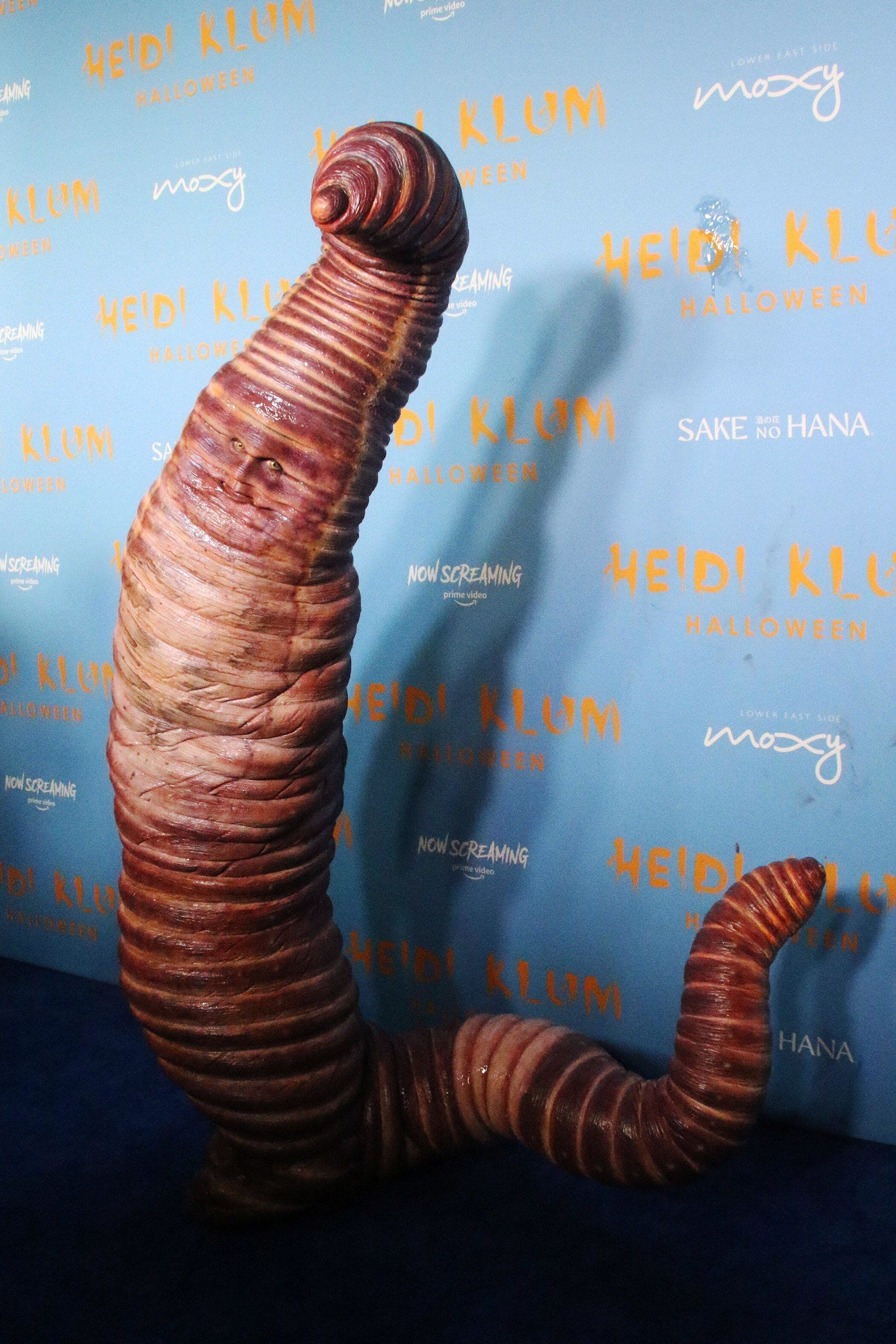
According to Jung, our collective unconscious is populated by "archetypes," ancient primal symbols that recur throughout human culture. Worms, embodying the fear of invasion, infestation, and transformation, can be considered one such archetype. Today's worm obsession, from memes to music videos may be a response to the collective trauma of the COVID-19 pandemic, which has invoked an ancient fear of our bodies and minds being invaded and transformed by an external force.
In addition to the fear of invasion, there's another significant aspect to the worm trend. Earthworms, in particular, are associated with mud – a primordial symbol of life's origins. This connection has found expression in the music industry, with artists like SZA and Caroline Polachek featuring themselves in mud in their album art and videos. The mud trend, much like the worm trend, can be seen as an expression of a desire to return to something real, tangible, and primitive in an age of abstract technology and alienation.
LINKEDIN'S BIZARRE “BROETRY” PHENOMENON
LinkedIn has seen a surge in the popularity of a peculiar writing style characterized by single-line paragraphs and personal anecdotes. I'm sure you've seen it.
The term "broetry" defines a style of prose increasingly popular on LinkedIn. Characterized by one-line paragraphs telling personal stories or workplace anecdotes, ending with a clichéd lesson or a motivational quote, broetry is viewed by some as a departure from clear and precise writing.
Broetry's structure typically includes a catchy one-sentence opener, a personal or career anecdote often portraying the writer in a positive light, and ends with a clichéd life lesson or motivational thought. This format seems unique to LinkedIn, where the broem often stands out against the generally business-oriented content.
Despite criticism for its cliched content and self-aggrandizing tone, broetry's popularity points to an evolving communication landscape where personal stories and emotional connection are gaining traction even in professional spaces.
NOT EVERYONE IS ON BOARD WITH THE “NEW” LINKEDIN
As LinkedIn transforms from a strictly professional networking platform to one with a more social focus, it has generated mixed reactions among users. The platform, now sometimes referred to as "Facebook for suits," increasingly features personal posts, childhood stories, and admissions of vulnerabilities.
This shift has led some to worry that the channel is losing its professional identity. Nevertheless, these changes reflect a broader evolution in how we perceive and engage with professional spaces in the digital era. As LinkedIn continues to adapt, the discussion around what constitutes professional networking behavior in an interconnected world evolves alongside it.
PHYGITAL EXPERIENCES IN THE ERA OF CONTENT FATIGUE
In an era marked by content fatigue, 'phygital' experiences offer a novel way to engage audiences. By blending the physical and digital realms, these experiences offer immersive, interactive content that can help brands stand out. The rise of phygital experiences points to a broader trend of hybridization in content creation, where the lines between the real and virtual are increasingly blurred.
BEREAL'S FALL FROM SOCIAL STARDOM: WHAT WENT WRONG?
BeReal, once touted as the next big thing in the world of social media, seems to have lost its charm. The app, which aimed to capture spontaneous, 'real' moments of users' lives, surged in popularity upon its launch. Yet, the promise of authenticity that initially drew users to BeReal appears to have waned, leading to a dramatic decrease in user engagement and activity.
Daily users have dropped from 20 million in October 2022 to 10 million in February 2023, as the platform struggles to engage creators and brands due to its posting restrictions and follower limits. Competition from other apps, such as TikTok's BeReal clone, TikTok Now, is also a contributing factor. With similar features and more user-friendly functions, TikTok Now has managed to capture the attention of users who were once drawn to BeReal. BeReal's core promise of providing an authentic social media experience might not be what users truly want. It's human nature to want to present your best self to the world, to stand out amongst others and offer something no one else has.
DON'T CALL IT A ‘MOOD BOARD’ - IT'S A WORLD
The age-old practice of creating mood boards is undergoing a transformation. As branding evolves to encompass more elements than just color and iconography, professionals are moving towards creating 'brand worlds'. These are comprehensive, dynamic documents that represent the tone, style, and ethos of a brand. This shift marks a significant change in how we approach visual representation and has implications for creatives in a variety of fields.